0 Comments
Azura Credit Union Presents 5th Annual Topeka Veterans Parade & Salute Our Heroes Festival10/31/2017 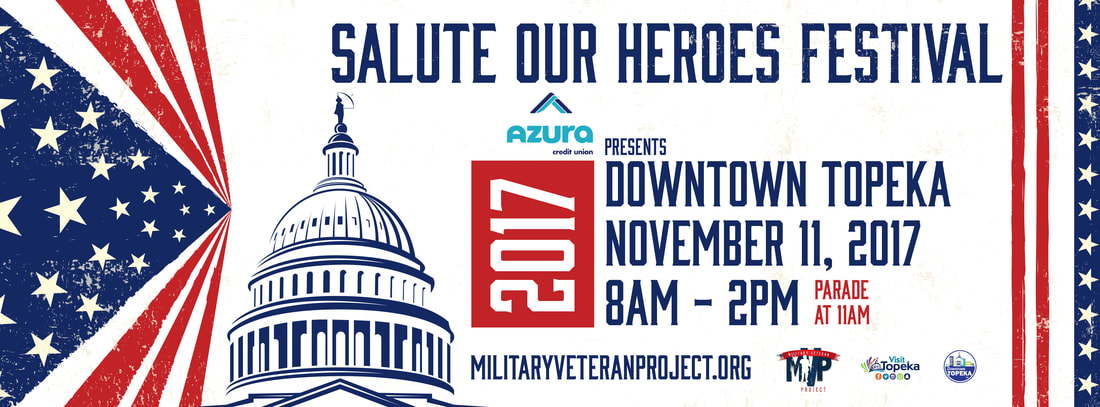 For Immediate Release Topeka, KS – November 7, 2017: The Military Veteran Project is thankful to Azura Credit Union to lead sponsors of the fifth annual Salute Our Heroes Festival & Topeka Veterans Parade, to be held on Saturday, November 11, 2017. This annual event is on a mission to be one of the largest celebration of service in our country. While carrying on the traditions of honoring the service and sacrifice of veterans , offering the public the opportunity to show their support for those who serve on our nation's most visible stage in the State Capitol of Kansas, Topeka. Sponsorships and contributions to the patriotic festival directly benefits support programs, alternative treatments and research for military suicide prevention. For sponsorship and ticket information and to learn more about this event, visit https://www.militaryveteranproject.org/saluteourheroesfestivaltopeka.html Established in 2012, the Military Veteran Project secures funding for alternative treatments not provided by Veterans Administration, research and advocacy in Washington DC to assist with achieving its mission. Events such as the Salute Our Heroes Festival, which had a record breaking number of 6,000 people in attendance for the 2016 year, assisting with mobilizing public support for our veterans, connecting our veterans with resources, and organizations serving our veterans. About Azura Credit Union History of Educational Credit Union Educational Credit Union was formed in 1939 as Topeka Teachers Credit Union by a group of educators. The credit union started with just 29 members and $144 in total assets. At the time of merger, Educational Credit Union boasted over 24,000 members, with over $208 million in total assets. History of Quest Credit Union Quest Credit Union was founded in 2010 with the merger of Credit Unions United (1951) and Credit Union One of Kansas (1956.) Their membership roots run deeply with The Goodyear Tire & Rubber Company, Bell Telephone, State of Kansas Employees and more. At time of merger, Quest had over 23,000 members, with over $274 million in total assets. Going Forward, and Above and Beyond As Azura Credit Union, the merger expanded services and opportunities for members, while providing efficiency and technology benefits. Between both credit unions, we have over 140 years of serving our Kansas members and surrounding communities. About Military Veteran Project The Military Veteran Project. is a private, nonprofit 501(c)3 corporation. It is governed by a volunteer board of directors, composed of business and community leaders. Its board meets monthly and lends it expertise to the operations of the Foundation. To learn more about Military Veteran Project click here  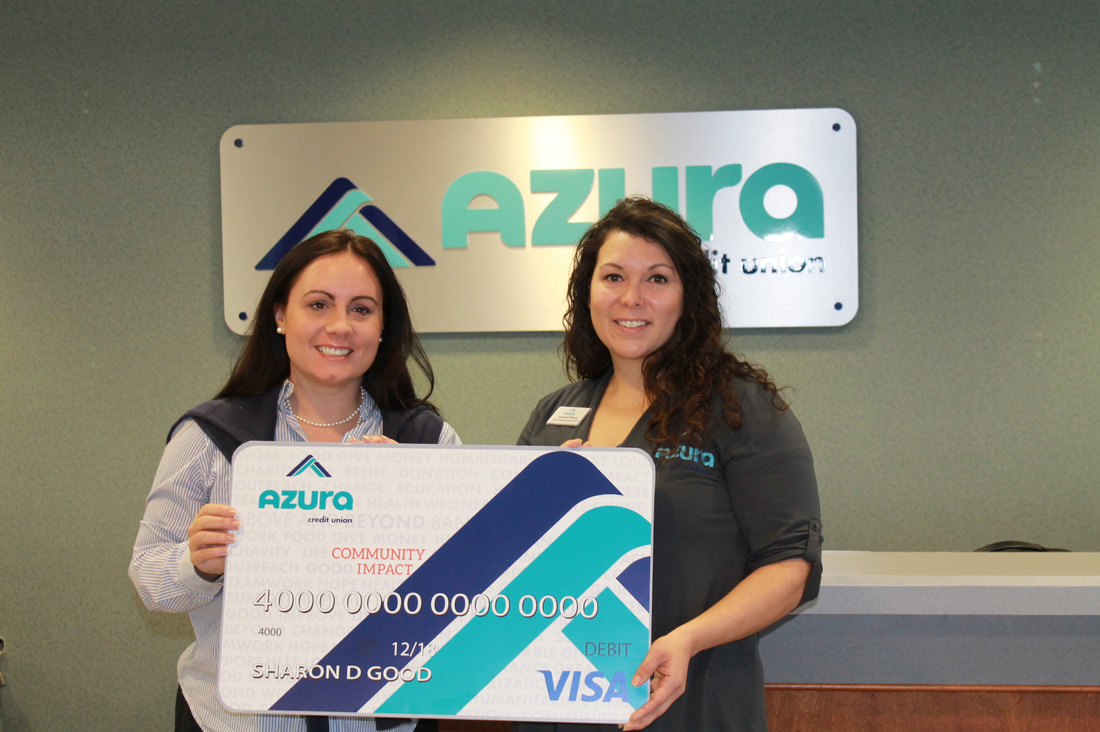 Our Community Impact Card allows you to make a purchase and make a difference!
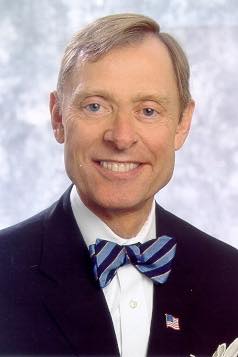 MEDIA ALERT PLEASE HOLD UNTIL WEDNESDAY OCTOBER 11, 2017 10 A.M. ANNOUNCEMENT TO TAKE PLACE AT AZURA CREDIT UNION 1129 S. KANSAS AVENUE VETERAN’S DAY PARADE GRAND MARSHALL ANNOUNCEMENT TOPEKA, KS- Military Veteran Project is honored to announce Dr. Jerry Farley President of Washburn University will be the Grand Marshall for the 5 th Annual Salute Our Heroes Festival & Topeka Veterans Parade. On Saturday November 11, 2017 the Salute Our Heores Festival & Topeka Veterans Parade will start with hosting a Patriotic Pancake breakfast at HHB at 8 a.m., followed by the Super Heroes Run, Walk & Crawl beginning at 9:30 a.m. and the Topeka Veterans Parade will begin at 11 a.m. The days festivities are all located in downtown Topeka. Registration information and details for the days festivities are all available online at MilitaryVeteranProject.org. Azura Credit Union is the presenting sponsor for this year’s Salute Our Heroes Festival and Topeka Veterans Parade. In addition to their funding and support, they have coordinated with the Topeka Capital-Journal to sponsor a tribute to our veterans. The Topeka Capital-Journal will publish on Veterans Day, November 11 a tribute to veterans and service members. “Honoring Our Heroes, sponsored by Azura Credit Union” will include photos of men and women in uniform. Beginning today until October 27 you can submit your request to honor a veteran by submitting the high- quality photos free of charge to The Capital-Journal at cjonline.com/heroes. The Topkea Capital- Journal also will publish the veteran’s name, years of service, hometown and branch of military. “This is a wonderful opportunity to say thank you to the men and women who have given so much of themselves to keep our country safe,” said Tomari Quinn, Editor and Vice President of Audience at Topeka Capital-Journal. “We’re grateful to them for their service.” Military Veteran Project is honored to have the community come together to celebrate and honor all of our veterans. Special thanks to this year’s sponsors: Azura Credit Union, Northrup Grumman, NuSound Hearing and Hyvee. The addition of such a prestigious community leader with Dr. Jerry Farley as this year’s Grand Marshall speaks volumes to the communities support for our military heroes. Jerry Farley has served as President of Washburn University since 1997. Dramatic changes have occurred on campus including new academic programs, reinvigoration of a vibrant Student Life program and construction of six major new buildings, and extensive renovation of many other buildings and all classrooms. He holds a B.B.A., M.B.A. and Ph.D. all from the University of Oklahoma. He is a C.P.A. and has been president and chair of the board of several state and national professional organizations. He has authored or co- authored numerous articles and books in his field – not for profit finance and accounting. Jerry has served on local and state boards for United Way, American Red Cross, American Cancer Society, Boy Scouts, Kansas Society of CPA’s, Heartland Visioning, state and local Chambers of Commerce and economic development corporations, including Go Topeka. He is past Chair of the Topeka Chamber of Commerce. He serves on Board of Directors for the Security Benefits Funds Board, Westar Energy and CoreFirst Bank. He was inducted into the Topeka Business and Oklahoma Higher Education Halls of Fame and is a Rotary Paul Harris Fellow. In 2016, he was named Distinguished Kansan of the year by the Native Sons and Daughters of Kansas.
For More Information on Salute Our Heroes Festival & Topeka Veterans Parade Click HERE 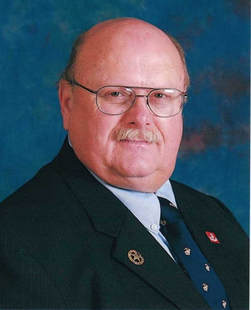 Clinton County Veterans Service Officer Joe Root has been nominated as Indiana Veteran of the Year for 2017. Judges, who are themselves veterans, will study all of the nominations but the names, rank, distinctions and tours of duty of the nominees will be redacted, according to Mike Mustain, chairman of the Indiana Veteran of the Year Committee.
The nominees will be identified by gender and an identifying number, Mustain detailed. The Female Veteran of the Year and the Male Veteran of the Year will be announced at the awards banquet Nov. 9 in New Albany, and each nominee will recognized with a certificate. Root served in the U.S. Marines from 1966 to 1970 during the Vietnam era but he was not engaged in the conflict, he said. As a quality control inspector, he was not allowed to leave his post at Quantico, Va., he said. Before being appointed to the veterans service officer's (VSO) post, Root worked two years as a Clinton County jailer and and radio operator and 21 years in the Sheriff's Office, retiring in 1996. Root also was an original member of the Frankfort Bass Casters, he said, and spent time competing on the Bass Circuit, with his biggest catch a 9.5 pound lunker hooked in Florida. At the time, Root was working at the Sheriff's Office, he was also employed full-time at Peter Paul candy factory in Frankfort. "I would work my shift, fish, and work my shift," he said. Root continued on the circuit until he found it wasn't fun anymore. "We started before daylight and ended sometimes at dark," he explained. Former VSO Lloyd Brower gave Root his start in the veterans office he would later lead. After retirement, Root worked for Brower as a volunteer until one Monday when he accompanied Brower to a Clinton County Commissioners' meeting. According to Root, at the meeting Brower told the commissioners, "I'm retiring, and this is my replacement." Root, caught unaware, graciously and gratefully accepted the position nonetheless. Many local veterans are grateful for the effort Root has put in on their behalf. "I appreciate how much he helped me get benefits," said Jack Taylor, of Frankfort. "He had done a very good job in-between me and the Veterans Administration. "He has certainly helped me out a bunch." Frankfort City Building Inspector Sam Payne, who works just down the hall from Root in Old Stoney, describes Root as a "great guy." Root served under Sheriff Robert Payne, Sam's dad. "He's a tremendous guy. He's done a lot for the community and done a tremendous job for us as veterans. Payne said he believes Root has had a role in ensuring local veterans get the respect they deserve but often previously didn't get. Most people don't understand that veterans have different needs depending on a their age and the conflict and era in which they served, Root explained. "Vets are not getting recognized as they should be, and lots of things could have been done that weren't done," he said. "There are lots of older vets who don't look positively at younger vets, and we don't recognize the problems each group of vets have. Those who served in the same conflict don't meld as well with others who served in other conflicts." To honor Clinton County veterans, Root approached the commissioners to build a memorial to honor local servicemen and women. "'You can build anything you want,' they said. 'You just have to pay for it,'" Root recounted. In return, Root requested the commissioners set up a non-revolving fund for donations, meaning that any money left over at the end of the county's budget year stayed in the fund instead of being forfeited. "The commissioners have been very good to me," he noted. "They've never turned me down for anything." Within eight months he had raised enough money to start the memorial, which includes selling bricks with the names of veterans locals want to memorialize. "I don't want to be a burden on the taxpayers," Root said. "I've built the memorial as a collaborative effort." Root can be found at the Veterans Service Office in Old Stoney at 301 E. Clinton St., Frankfort, from 9 a.m.-3:30p..m. Monday, Tuesday and Wednesday. While helping Clinton County veterans resolve any problems they may have, he also spends his time assisting other VSOs, he said, adding he is currently working with a couple of newer officers, one of whom calls Root about twice a week for advice. "I wasn't looking for this, but it has been very rewarding. A guy last week stopped in with a smile this wide and told me about the back-payment check he received, along with money for hearing aids," Root said. Root also helped a family replace their loved one's headstone 17 years after their death - when someone finally noticed the name had been misspelled. "Within a week, I got approval for a new stone and within about two months they had made and sent a new one." Mary Jane Weaver credits Root for returning her husband's dog tags, which had been missing since 1944. The dog tags had been uncovered by an excavator working at the former Weaver home site, she said. "The contractor was there working on the yard and he had dug a couple of forkloads when he spied something," Weaver recalled. "He took it home, cleaned it up as good as he could, let it lay awhile and then decided to take it to Joe Root, who, in turn, researched it." After Root tracked down the tags' original owner, he took them to Weaver's son, Bert, who returned them to his mother, who was astonished to receive them after they were lost for six decades. "(Joe's) an all-around great guy," she said. In addition to dedicating himself to serving veterans, he also served on the Frankfort City Council and still serves on the Frankfort Utility Service Board. Among his proudest moments, said Root, was attending the inauguration of President Donald Trump in January with his grandson, Blayne Root. This was Root's third inauguration, having attended both of George W. Bush's swearing-in ceremonies but he was especially enthused to share the event with Blayne, who serves as a full-time police officer for Whitestown and also assists as a medic for Lifeline helicopter. "I can't think of a better candidate for (Veteran of the Year), said veteran Joe Palmer, of Frankfort.
Topeka, KS (September 25, 2017) — Today, Military Veteran Project announces partnership with Camp Corral to expand Camp Corral’s programs supporting veterans and their families. The partnership unifies Military Veteran Project's commitment to the military community and Camp Corral, a nonprofit organization that provides free, one-of-a-kind summer camp experiences for children of wounded, disabled or fallen military service members. "As a Military Widow, I understand the true value that Camp Corral brings to our military children whose parents have been wounded, disable or killed in action." Said Melissa Jarboe, Founder of the Military Veteran Project. "These children are the true definition of resiliency and deserve to have a life experience to meet other children who have walked in their shoes. The kind of peer to peer support these children receive is priceless and my team at the Military Veteran Project and I will do everything we can to ensure our military children have every opportunity they deserve because their sacrifice can never be repaid." Camp Corral was founded in 2011 as a one-camp pilot program and has rapidly grown to 21 partner camps in 19 states. The organization partners with accredited YMCA and 4-H camps that offer military kids traditional camp experiences through activities such as horseback riding, canoeing and rock climbing. Camp Corral has served over 10,000 military children, the majority of whom have a parent who is wounded, disabled or fallen. Established in 2012, the Military Veteran Project a 501 (c) (3) tax-exempt non profit, secures funding for alternative treatments not provided by Veterans Administration, research and advocacy in Washington DC to assist with achieving its mission. About Camp Corral Camp Corral, a 501 (c) (3) tax-exempt, nonprofit corporation, is a free, one-of-a-kind summer camp for children of wounded, disabled or fallen military service members. Since its founding in 2011 by Golden Corral, Camp Corral has grown to 21 camps in 19 states and has served more than 10,000 children. Although any child ages 8 to 15 from a military family is eligible, registration priority is given to children of wounded, disabled or fallen military service members. For more information, visit www.campcorral.org.   For Immediate Release Topeka, KS – September 21, 2017: The Military Veteran Project is pleased to add NuSound Hearing to the follow sponsors of the fifth annual Salute Our Heroes Festival & Topeka Veterans Parade, to be held on Saturday, November 11, 2017. This annual event is on a mission to be one of the largest celebration of service in our country. While carrying on the traditions of honoring the service and sacrifice of veterans , offering the public the opportunity to show their support for those who serve on our nation's most visible stage in the State Capitol of Kansas, Topeka. Sponsorships and contributions to the patriotic festival directly benefits support programs, alternative treatments and research for military suicide prevention. For sponsorship and ticket information and to learn more about this event, visit https://www.militaryveteranproject.org/saluteourheroesfestivaltopeka.html Established in 2012, the Military Veteran Project secures funding for alternative treatments not provided by Veterans Administration, research and advocacy in Washington DC to assist with achieving its mission. Events such as the Salute Our Heroes Festival, which had a record breaking number of 6,000 people in attendance for the 2016 year, assisting with mobilizing public support for our veterans, connecting our veterans with resources, and organizations serving our veterans. About Nu Sound Hearing Center NuSound Hearing Center strives to treat each patient as a member of our own family by providing the best possible hearing care and a customer experience that is second to none. We focus on continually serving Topeka & Northeast Kansas providing the latest in hearing aid technology, hearing protection and tinnitus management tools. As an established business in the communities we serve, we are committed to enriching not only the lives of our area's residents but also, the lives of others around the world. We partner with your primary care physician by providing copies of all test results and recommendations made by our staff. Your hearing is related to and can be affected by many other health issues and NuSound believes a partnership with your health care professional ensures the best level of care on your hearing journey. We focus on continually serving the hearing needs of the nearby communities with personalized hearing care. NuSound Hearing Center is family-owned and staffed with a team of licensed specialists to give each patient the dedicated care they deserve. Belinda Gonzales, Owner & Hearing Instrument Specialist Sam Gonzales, Owner & Director of Operations Marissa Gonzales, Director of Marketing & Patient Care, Hearing Instrument Specialist Megan Kirkwood, Hearing Instrument Specialist Tiffany Watkins, Practice Patient Ambassador https://www.nusoundhearing.com About Military Veteran Project The Military Veteran Project. is a private, nonprofit 501(c)3 corporation. It is governed by a volunteer board of directors, composed of business and community leaders. Its board meets monthly and lends it expertise to the operations of the Foundation. To learn more about the Military Veteran Project, visit http://www.militaryveteranproject.org. 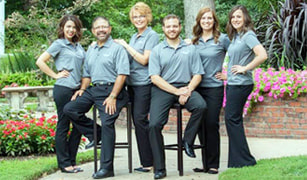 PRESS RELEASE: Northrop Grumman Announced as Bronze Star Sponsor of Salute Our Heroes Festival9/20/2017  For Immediate Release
Topeka, KS – September 20, 2017: The Military Veteran Project is pleased to add Northrop Grumman to the follow sponsors of the fifth annual Salute Our Heroes Festival & Topeka Veterans Parade, to be held on Saturday, November 11, 2017. This annual event is on a mission to be one of the largest celebration of service in our country. While carrying on the traditions of honoring the service and sacrifice of veterans , offering the public the opportunity to show their support for those who serve on our nation's most visible stage in the State Capitol of Kansas, Topeka. Sponsorships and contributions to the patriotic festival directly benefits support programs, alternative treatments and research for military suicide prevention. For sponsorship and ticket information and to learn more about this event, visit https://www.militaryveteranproject.org/saluteourheroesfestivaltopeka.html. Established in 2012, the Military Veteran Project secures funding for alternative treatments not provided by Veterans Administration, research and advocacy in Washington DC to assist with achieving its mission. Events such as the Salute Our Heroes Festival, which had a record breaking number of 6,000 people in attendance for the 2016 year, assisting with mobilizing public support for our veterans, connecting our veterans with resources, and organizations serving our veterans. About Northrop Grumman Northrop Grumman Corporation is an American global aerospace and defense technology company formed by Northrop's 1994 purchase of Grumman. The company was named as the fifth-largest defense contractor in the world in 2015. Northrop Grumman employs over 68,000 people worldwide. It reported revenues of $23.526 billion in 2015. Northrop Grumman ranks No. 124 on the 2015 Fortune 500 list of America's largest corporations and ranks in the top ten military-friendly employers. It is headquartered in West Falls Church, Virginia. Northrop Grumman is a leading global security company providing innovative systems, products and solutions to government and commercial customers worldwide, offering an extraordinary portfolio of capabilities and technologies for applications from undersea to outer space and into cyberspace. http://www.northropgrumman.com About Military Veteran Project The Military Veteran Project. is a private, nonprofit 501(c)3 corporation. It is governed by a volunteer board of directors, composed of business and community leaders. Its board meets monthly and lends it expertise to the operations of the Foundation. To learn more about the Military Veteran Project, visit http://www.militaryveteranproject.org. 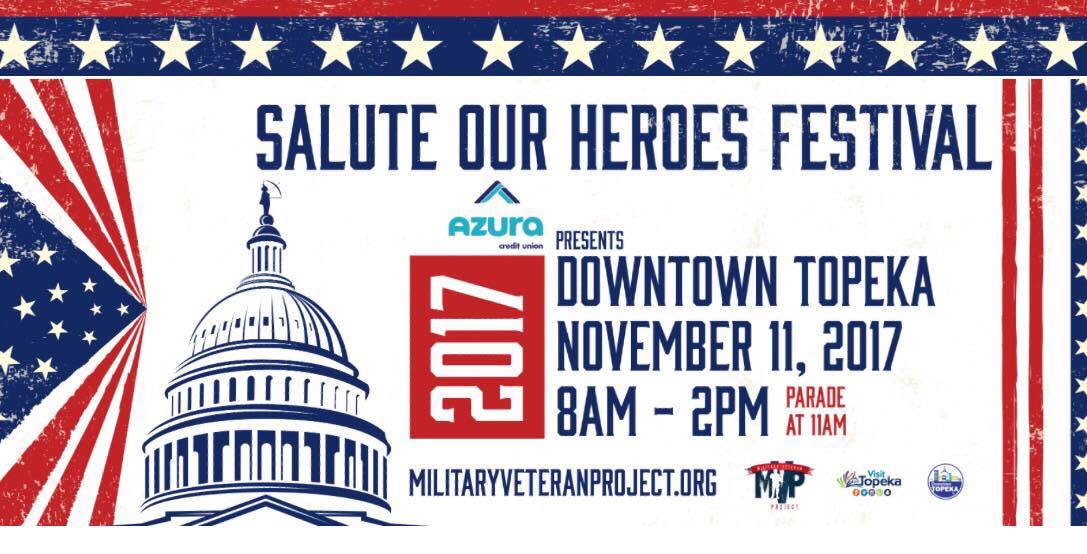 AZURA CREDIT UNION PRESENTS 5th Annual Salute Our Heroes Festival & Topeka Veterans Parade The Salute Our Heroes Festival is a program organized by the Military Veteran Project a non-profit organization dedicated to prevention of military suicide. The Festival & Parade assist with mobilizing public support for our veterans, connecting our veterans with resources, and assisting organizations serving our veterans. JOIN US FOR PATRIOTIC PANCAKES AT HHB BBQ Saturday November 11, 2017 our morning starts off at HHB BBQ for Patriotic Pancakes with veterans eating free with the purchase of a ticket from a non military participant. Pancakes are served at 8am until 11am. If you want to attend pre purchase your tickets below or purchase them at the door morning of event. If you are not able to attend but want to show your gratitude click below, volunteers can register below and be ready to see local celebrities serving up breakfast to show their appreciation. #PatrioticPancakesTopeka Patriotic Pancake Information Grab your cape, company swag shirts or your favorite patriotic outfit and join us for the Super Hero Fun Run! Runners assemble! Join the Super Heroes Run, Walk, & Crawl around the State Capitol for the Mightiest Heroes of them all! It's a power-packed morning of fantastic fun and amazing excitement with mighty runs, incredible surprises and the chance to take home your own Super Hero finisher medals. Join the fun during Super Heroes Run for an unforgettable adventure. Dont worry eat your pancakes first and then walk outside the door at HHB and get ready for the Super Hero Fun Run! P.s. Dont forget your cape!! Local Businesses you are encouraged to show your company spirit too! Throw on that company swag and a cape and get ready to RUUUNNNNNNNN for Fun! #SuperHeroFunRunTopeka Schedule: Date: November 11, 2017 Registration: 7 a.m. to 9 a.m. Start Time: 9:30 a.m. Super Hero Mini Run, Walk, crawl Start Time: 10 a.m. Location: 900 Block S Kansas Near Harry Colmery Park Packet Pick-up: Will occur the day of the event starting at 7am Super Heroes Fun Run Information Topeka Veterans Parade Saturday November 11, 2017 Pre- Registration & registration for parade opens at 9am. Parade begins at 11am! Bring your group to the Capital City of Kansas and march in the Topeka Veteran's Parade at 11am, Staging begins at 9am. Please remember to decorate your float or parade entry in Patriotic Red, White and Blue Colors. The Parade is the main event in the Salute Our Heroes Festival! #TopekaVeteransParade Parade Registration We did NOT mean to leave your company out of SPONSORING the most Patriotic event in Topeka! Join us as a sponsor today!  Thank you to our Corporate Sponsors!   #22ADAY Black MENS Tshirt
$19.99 - $21.99
#22ADAY is an movement to bring awareness to 22 Veterans who commit suicide each day. 1 veteran every 65 minutes takes his/her own life.
FRONT #22ADAY BACK MVP LOGO Mens Veteran Definition Gray Soft Style TShirt
$19.99 - $21.99
'A Veteran is someone who, at one point in his life wrote a blank check Made payable to "The United States of America" for an amount of 'up to and including my life'
MILITARY VETERAN PROJECT VOLUNTEER TSHIRT
$19.99
Back of shirt
"Volunteers don't get paid, not because they're worthless, but because they're priceless" Front of shirt MVP logo The Military Veteran Project is a volunteer-driven charity committed to prevention of military suicide through research and treatment. Without the thousands of volunteers who have given their time, we wouldn't be able to continue the mission. Save A Warrior Challenge Charcoal Men's Tank Top
$16.99
Represent the Save A Warrior Challenge with this Charcoal Men's Tank Top
Mens Save a Warrior Challenge Soft Style Charcoal T-shirt
$19.99
Represent the Save a Warrior Challenge with this Men's Charcoal Soft Style T-shirt
Today, you can be a warrior to save a warrior. Join #SaveAWarriorChallenge! You along with others around the world will join forces to help prevent military suicide through research and treatment in a few easy steps. 1 – Create a #SaveAWarriorChallenge page. 2 – Challenge your friends, family and colleagues to do "22" and then see who can raise the most dollars and awareness! Mens Ride 4 The Fallen Black Tshirt
$19.99
Solid black cotton tshirt with Ride 4 the Fallen logo on front and MVP logo on sleeve.
The mission of the “Ride 4 the Fallen” is to perpetuate the memory of men & women who have answered the call of duty to serve our great country. Every May thousands of bikers take to the road to honor the fallen. Click Here to register now and create a campaign in your area or join a ride near you. Some of us have no idea what it's like to serve in the Military, or you have served and you know exactly what it is like to serve on foreign soil in war time. You know what it is like to come home after war struggling with night terrors, survivors guilt, memory loss among other things. Those of us who haven't served do not have any idea about the true cost of freedom. RIDE 4 THE FALLEN BULK ORDER 30 SHIRTS
$500.00
$360.00
Order bulk order of Ride 4 the Fallen T-shirts - Email [email protected] for complete list of sizes.
The mission of the “Ride 4 the Fallen” is to perpetuate the memory of men & women who have answered the call of duty to serve our great country.
Every May thousands of bikers take to the road to honor the fallen. Click Here to register now and create a campaign in your area or join a ride near you. Some of us have no idea what it's like to serve in the Military, or you have served and you know exactly what it is like to serve on foreign soil in war time. You know what it is like to come home after war struggling with night terrors, survivors guilt, memory loss among other things. Those of us who haven't served do not have any idea about the true cost of freedom. Our veterans return home from war unable to use the freedom they fought to protect on American soil. Every day, about 22 veteranslose their battle at home to post traumatic stress disorder. But it doesn’t have to be that way. There are simple solutions like completing research, alternative treatments and diagnosing traumatic brain injuries that can help prevent military suicide. I started this fundraising campaign to help Military Veteran Project fund these types of projects around the world, and I'm looking for anyone who can help me. Please donate -- anything you can give is a huge help. 100% of the money will be used to fund research and treatment, and while the research is being done the Military Veteran Project, will keep us up to date by sharing stories of the veterans and families we helped. Help carry on the memory of a fallen hero by riding in their honor! Gather your friends, family or reach out to local businesses for support. Create unity in your community by honoring America's fallen and raise funds for treatment & research for suicide prevention. Men's Military Suicide Awareness Black Soft Style Tshirt
$19.99 - $21.99
Men's Military Suicide Awareness Black Soft Style Tshirt
Everyday, 22 veterans lose their battle to post traumatic stress on American soil. That is 1 veterans every 65 minutes. The rates for the active duty individual services per 100,000 according to the report, were 23 for the Army, 23.1 for the Marine Corps, 14.4 for the Air Force and 13.4 for the Navy. The Veteran Administration statistics confirm 22 Veterans a day are succumbing to suicide on American soil. The total number of those losing their battle grows larger with each day research and treatments are not able to be done. The Military Suicide Awareness #22ADAY Movement is the advocacy action network and the natural next step to the mission of the Military Veteran Project. Military Suicide Awareness gives a voice to the vast network of volunteers, donors, and participants involved in the work of the Military Veteran Project. Events are organized by Ambassadors and are unique in every way – from small groups of people at local malls, hundreds of people uniting together at parks, schools, and even at parades in your hometown to a small awareness movement at City, County or State facilities (permission required) to help the movement grow and spread the awareness in our communities. By becoming an Ambassador you will receive photos, pamphlets, and other items to educate the community of the reality of military suicide. Military Suicide Awareness Mens Tshirt Bulk Order
$375.00
Bulk order of 35 Military Suicide Awareness T-shirts
Please email requested sizes after purchase to [email protected] The Military Suicide Awareness #22ADAY Movement is the advocacy action network and the natural next step to the mission of the Military Veteran Project. Military Suicide Awareness gives a voice to the vast network of volunteers, donors, and participants involved in the work of the Military Veteran Project. Events are organized by Ambassadors and are unique in every way – from small groups of people at local malls, hundreds of people uniting together at parks, schools, and even at parades in your hometown to a small awareness movement at City, County or State facilities (permission required) to help the movement grow and spread the awareness in our communities. Unisex Patriotic Running Team MVP Tank
$39.99
Unisex Running Team MVP Tank
Every 65 minutes a veteran loses their life to suicide, we are proud to introduce our #TEAMMVP running tank as a way to maximize the unity for our survivors and supporters to run in honor of or memory of a loved one. With your help, our in store sales of our charity items have raised nearly $150,000 for military suicide prevention! We, here at the Military Veteran Project, have the utmost gratitude to those of you who purchased apparel and made donations. We have decided to continue the tradition of ensure that 100% of ALL net proceeds for our MVP apparel goes directly to our mission, programs and events supporting the military community. 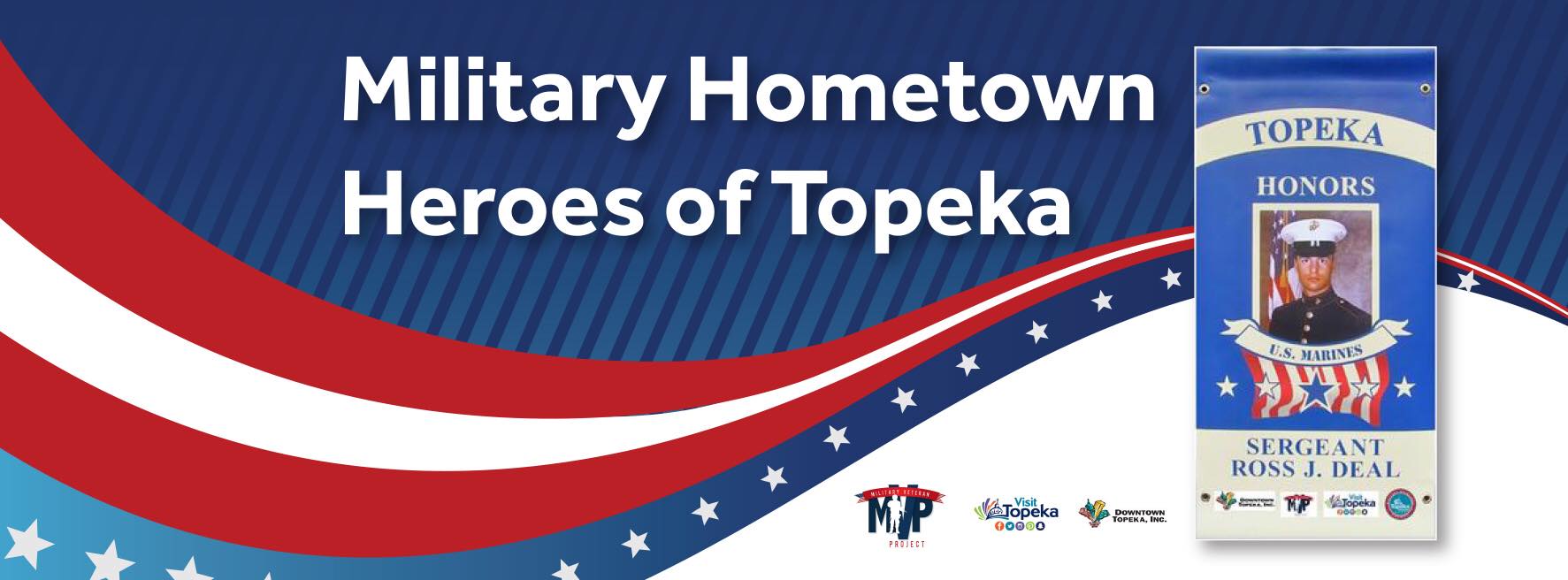 For immediate release: Wednesday, Sept. 6, 2017
News from Greater Topeka Chamber of Commerce Military Relations Council 120 S.E. 6th Ave. Topeka, KS 66603 Contact: Michaela Saunders, vice president of brand strategy, 785.234.1030 Note to editors: An illustration of a banner is available on request, as is the list of recognized veterans. Some families participating Friday have agreed to speak with the media. We will gladly make introductions Friday morning. Hometown Heroes and families to be recognized at banner unveiling Friday Twenty-three of Topeka’s Military Hometown Heroes will be recognized on downtown banners beginning on Patriot Day, Sept. 11. To honor them and their families, the Military Veteran Project, Topeka Chamber Military Relations Council and other sponsors will host a short program beginning at 9 a.m. at Westar. Topeka’s Military Hometown Heroes banner program connects the Capital City with other communities in Kansas and across the nation in creating a vibrant tribute for our neighbors who are serving, or have served in the armed forces of the United States. Spearheaded by the Military Veteran Project, the banner program also is made possible with support from the Military Relations Council, the City of Topeka, Visit Topeka and Downtown Topeka, Inc. “We wanted to give our community a way to honor and pay tribute to our local veterans and giving loved ones a way to show their appreciation for their veteran’s service through the Military Hometown Heroes of Topeka,” said Melissa Jarboe, founder of the Military Veteran Project, a volunteer-driven nonprofit focused on prevention of military suicide through research and treatment. MVP is based in Topeka. “This is a big deal for these families.” MVP received enough applications to recognize a veteran to fill next year’s 40 banner positions as well. On Friday morning, beginning at 9 a.m. at Westar headquarters, Hometown Heroes and family members of those who have memorial banners will be able to view the banner prior to the brief presentation. Topeka Mayor Larry Wolgast will speak, as will Jenalea Randall, whose husband, Lt Col Anthony Randall, is remembered on a banner. The names of every Hometown Hero recognized with a banner will be read aloud. The families are then invited to share a private meal provided by Aboud’s Catering and Million Air. Special thanks to Westar and Absolute Designs by Brenda for their support as well. The Hometown Heroes banners will be on public display in the Westar pocket park from approximately 11 a.m. to 1 p.m. Friday and will be displayed beginning Monday on downtown light posts. The banners will remain on display downtown through Veterans Day. For more information click HERE 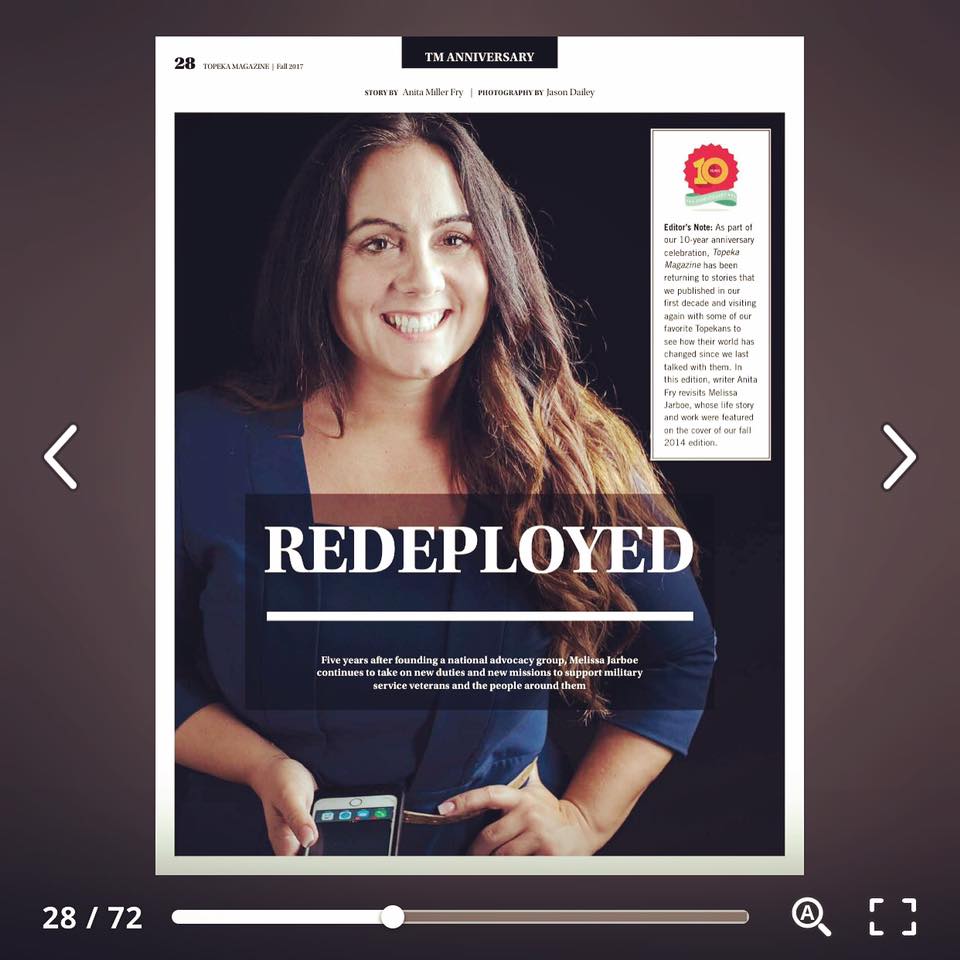 The Topeka Magazine Fall issue is out & I had a chance to sit down with reporter for a one on one interview about the growth of the Military Veteran Project, my new position in Washington DC & my personal life... Balancing public and private lives can be done With a little bit of work and so worth it. https://issuu.com/sunflower_publishing/docs/tm17fa/28
|
Sign up for our mailing list by clicking here
Archives
March 2020
|
 RSS Feed
|
Get to know us
|
Resources
|
Get Involved
|
|
|
|
|
The Military Veteran Project is a non-profit 501 (c)3 organization, IRS identification number 46-0877378. Donations made to the Military Veteran Project are tax deductible in the U.S. ·