|
Minneapolis resident Mike MacDonald took up photography on a lark, while he was studying to become an EMT at Inver Hills Community College, but soon realized the visual medium allowed him to explore some of the things that he and other war veterans experienced when reintroduced to civil society. MacDonald served five years in the U.S. Army police corps., and was involved in 250 missions during his year in Iraq.
When he returned, MacDonald continued serving as law enforcement on military bases, where he came face-to-face with more fallout from war among his fellow soldiers, many of whom experienced extreme forms of post traumatic stress disorder (PTSD). MacDonald's project, A Warrior's Reintegration, is meant to raise awareness and make progress on the high rate of suicide among former active-duty military members. Find out more about his work at MacDonald's website.
2 Comments
 We know life or body threatening traumatic events, like the terror attacks in Paris and Colorado Springs or repeated combat deployments, can injure the brain. But such injuries are not like bullets ripping through organs. When bullet meets flesh injury, even death, is inevitable. In contrast, traumatic events yield many outcomes. Most adapt. Some thrive. But some are torn apart, about 20%. Some lives never recover. Many end in suicide. This relationship between traumatic growth (resilience) and a traumatic stress disorder is extraordinarily complex in aggregate, and, as any clinician who works with traumatized patients will attest, even more so for any one individual. Of course, risk and reliance factors influence outcome. But no clear answers exists for why one person thrives while someone else suffers.
Pundits who write about trauma and resilience should honor that complexity, as well as the imperative to do no harm. Simplistic comforting illusions help no one and risk further stigmatizing those suffering from PTSD. A particularly egregious example of someone getting it wrong was David Brooks’ Thanksgiving column “Tales of the Super Survivors.” Brooks argued that those who thrive, the “super survivors,” as opposed to those wrecked by PTSD, are able to tell themselves moral narratives of redemption. They have a post-trauma story that makes sense. The background for this success is lots of unconditional love early in life (blame the parents!) and being optimistic by nature. The wrong story leads to suffering and the right story breeds resilience: “individuals need moral stories if they are going to recover.” Brooks could not be more wrong. He misses the basics of traumatic experience. Trauma is not, as he writes, “a shock that ruptures the central story that you thought was your life.” Such disrupted narratives are symptoms of trauma, among many. But PTSD is not the wrong life-story, one that may be amoral or immoral or just insufficiently moral; it is damage to the brain’s capacity to tell stories. As a result the traumatic event is relived rather than narrativized. The moral content of one’s autobiographical narrative is a non-question because trauma is an event that overwhelms the brain’s capacity for narrative. It leaves you over-stimulated and out-of-control, reacting in an aisle at the Wal-Mart as though you were once again walking the rifle-torn streets of Fallujah, or Paris or Colorado Springs. Palms sweat, hearts race and vision narrows. Fear, helplessness, and horror fill and overwhelm the moment. You’ll do anything to avoid feeling that way. Forget shopping at a Wal-Mart, never again put yourself in an aisle of any sort. Withdraw and isolate. It’s safer. Maybe turn to drink and drugs, or maybe compulsive sex or gaming, or just stay home and stare at screens, anything to numb the traumatic Groundhog Day that has become your life. The traumatized haven’t lost a moral story line. They’ve lost the ability to tell their story about the traumatic experience. Recovery is regaining the ability to tell stories, regaining the ability to tell a story about a horrible feeling rather than living the feeling. So, when Brooks urges us to develop moral foreign policy narratives as a vaccine against PTSD he completely misses what trauma is. It’s not the narrative that’s off, it’s the ability to narrate, getting stuck in repetitive moments where the fight-or-flight mechanism fires at full speed for no apparent external reason. He wants to comfort us: the age of terror is not so bad; we just need better stories and all will be well. It seems he’s doing for the age of terror what apologists for the Catholic Church tried to do when the priest abuse scandal first came to light: it’s not so bad; most do really well even when traumatized; embrace the terror. His conclusion is startling: the “good news is there is no reason to be pessimistic during the war on terrorism. Individuals and societies are tough and resilient, and usually emerge from attacks better than before.” Bring it on; you make us stronger! But for some a traumatic event rips through a brain like a bullet. Now is not the time to stigmatize the traumatized for not telling themselves the right kinds of stories. It is time to make sure top-notch treatment is widely available. 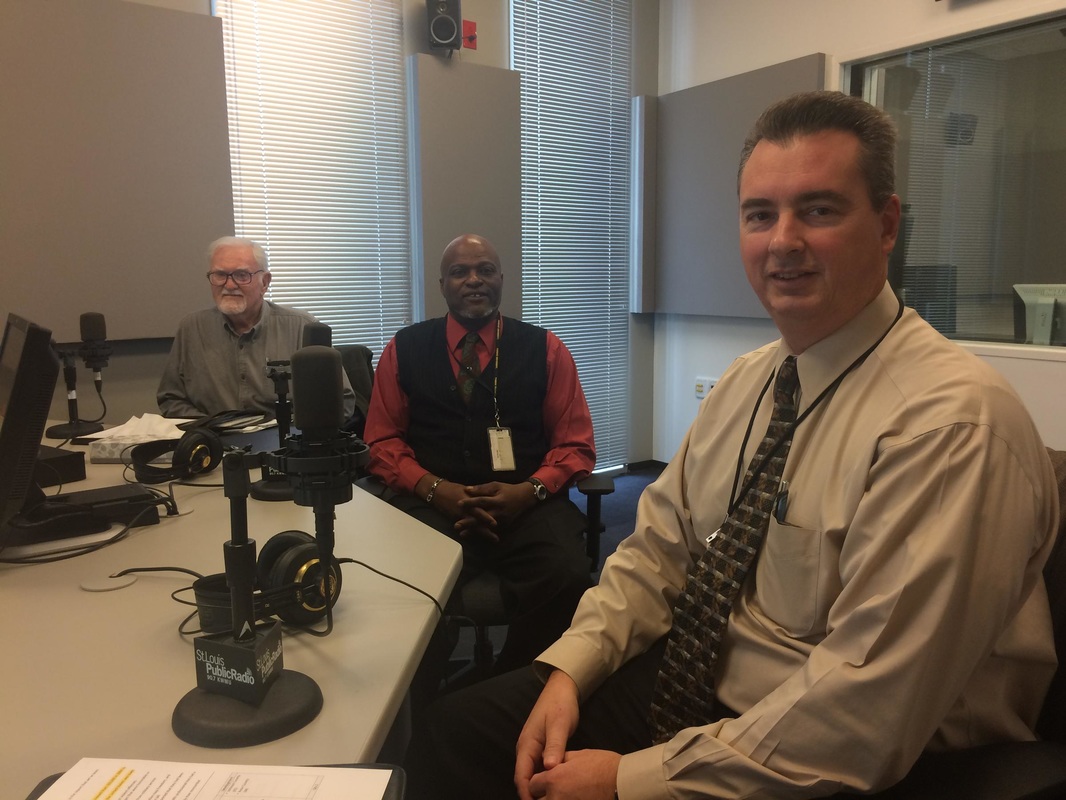 This past June, 33 Veterans Court Technology Clinic students and supporters watched as seven of their colleagues took part in the clinic’s first formal graduation ceremony. The clinic is part of a special drug court in St. Louis that provides an alternative to incarceration for veterans. It provides job skills for participants in the program.
“The Veterans Treatment Courts are an extremely valuable piece of the jurisdictional puzzle,” said Matthew Miller, a legal outreach coordinator with the Veterans Administration. “They’re an alternative to incarceration and they involve extensive supervision of participants on their dockets while they are able to stay in the community and work on recovery and treatment programs with a group of community assistance.” The first such court started in 2008 in Buffalo, NY, and the program has expanded to 220 locations across the country—including in St. Louis, St. Louis County and Jefferson County locations “Most of the vets that are participating have both substance abuse and mental health concerns when they come into court,” Miller said. About 20 percent of veterans that come to the VA for treatment nationwide come for some form of behavioral health treatment, Miller continued. Listen Listening... 27:34 What is Veterans Treatment Court and how is it at play in St. Louis? "St. Louis on the Air" host Don Marsh finds out.Kennedy Davis is a graduate of the Veterans Drug Court and is now the director of the Vet Court Technology Clinic (VCTC), which gives veterans (and others) job skills through computer training. “From my perspective, I’m looking at these veterans who are in need of assistance and the ones that I had come across have different behavioral problems and some cannot fit into society because of these reasons. Veterans Court sits you down and focuses in on your needs—they look to see what they can provide to help you fit into society.” Davis said that things changed for him when he was transferred to the Veterans Treatment Court for a drug offense, and the program set him up with a mentor. That mentor was Wilson (Woody) Powell, who is also the chair of the VCTC, and works with the court but not as part of the authority structure. That means that veterans can talk about anything with mentors and not face repercussions they might otherwise. The VCTC started in 2012, the same year that Davis graduated from Harris Stowe University. He’s now working on his Master’s degree. The clinic provides job training skills as well as help for veterans searching for jobs. The clinic, staffed by five volunteers as well as himself, is funded by private donors. “Right now, we’re kind of scrapping for resources,” said Davis. “But we make do.” More than 200 men and women have gone through the Veterans Treatment Court in the St. Louis area, and this June, seven people graduated from the VCTC. “Veterans Treatment Courts save money and result in better outcomes—both legally, in terms of recidivism, and in terms of treatment,” Miller said. |
Sign up for our mailing list by clicking here
Archives
March 2020
|
 RSS Feed
|
Get to know us
|
Resources
|
Get Involved
|
|
|
|
|
The Military Veteran Project is a non-profit 501 (c)3 organization, IRS identification number 46-0877378. Donations made to the Military Veteran Project are tax deductible in the U.S. ·